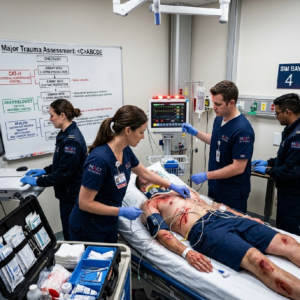
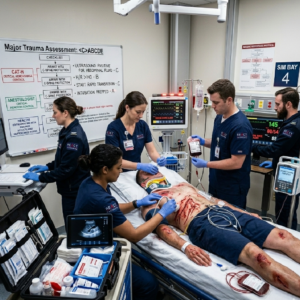
This elite module is built specifically for healthcare professionals operating on the absolute frontline of emergency trauma response:
 Medical Students looking to master trauma physiology and emergency medicine.Junior Doctors & Foundation Trainees entering critical care rotations or trauma centres.Nurses & Advanced Clinical Practitioners (ACPs) managing high-acuity trauma resuscitations.Emergency Medicine, Trauma, & Critical Care Clinicians leading resuscitation teams.Pre-hospital & Ambulance Professionals (Paramedics, HEMS) executing life-saving field triage.Flexible E-learning: Self-paced remote learning featuring highly interactive clinical cases, algorithmic decision trees, and expert-guided explanations.Face-to-Face Teaching: High-energy, classroom-based workshops utilising facilitated peer discussions, real-world case applications, and clinician-led teaching.
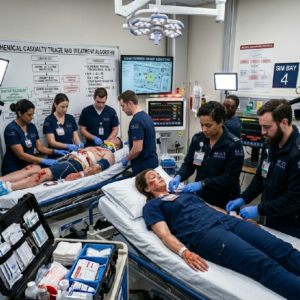 Step-by-step masterclass on conducting rapid primary and comprehensive secondary surveys.Practical training on cervical spine protection, advanced airway support, and oxygen therapy.In-depth analysis of major haemorrhages, traumatic brain injury (TBI), chest trauma, and abdominal injuries.Integration of trauma imaging modalities and real-time vital sign interpretation.Rapidly Identify Threats: Instantly recognise and prioritise life-threatening trauma conditions under intense pressure.Manage Severe Trauma Profiles: Successfully execute haemorrhage control, splinting, and aggressive fluid resuscitation strategies.Lead Multidisciplinary Teams: Coordinate complex trauma resuscitations, ensuring clear communication and optimal patient safety.Escalate Efficiently: Determine clear clinical indicators for immediate escalation to specialist trauma and surgical networks.