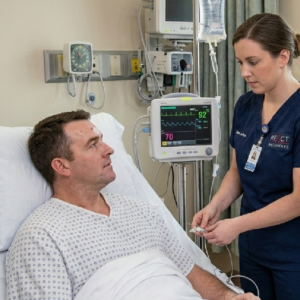
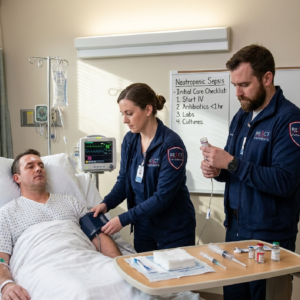
This life-saving module is essential for any professional working across emergency, acute, oncology, or community care pathways:
 Frontline Emergency Nurses, AMU Staff, & Urgent Treatment Clinicians triaging acutely unwell walk-ins.Junior Doctors & Medical Students evaluating cancer patients presenting with sudden deterioration.Paramedics & Emergency Care Practitioners managing immunocompromised patients in pre-hospital or home environments.Oncology & Haematology Teams seeking to optimise institutional infection risk protocols.Pharmacists & Pharmacy Students managing time-critical antimicrobial stewardship and chemotherapy safety.Healthcare Assistants & Support Workers wanting to spot the earliest warning signs and escalate instantly.Flexible E-learning: Self-paced remote learning featuring highly interactive clinical cases, algorithmic decision trees, and expert-guided explanations.Face-to-Face Teaching: High-energy, classroom-based workshops utilizing facilitated peer discussions, real-world case applications, and clinician-led teaching.
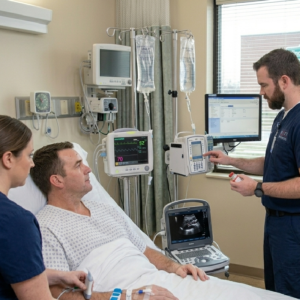 Deep dive into immunopathology and why low neutrophil counts weaken defence against pathogens.Comprehensive algorithms for implementing the ABCDE approach in oncology emergencies.Protocol guides for taking rapid blood cultures, biomarker testing, and vital sign monitoring.Standardised frameworks for prompt fluid support, oxygenation, and target antibiotic selection.
By the end of this module, you will be able to:
Identify At-Risk Profiles: Instantly spot patients vulnerable to neutropenic sepsis based on medical history, treatment status, and line access.Execute Rapid Clinical Assessment: Systematically assess vital signs, history, and subtle symptoms to initiate emergency protocols.Initiate Urgent Interventions: Administer life-saving empirical broad-spectrum IV antibiotics and supportive fluid therapy without delay.Navigate Escalation Pathways: Effectively escalate patients to senior review and seamlessly loop in oncology, haematology, or critical care teams.