

Course Overview Because of distinct anatomical and physiological differences—such as smaller airways, higher baseline metabolic demands, and minimal physiological reserves—respiratory


Course Overview Because of distinct anatomical and physiological differences—such as smaller airways, higher baseline metabolic demands, and minimal physiological reserves—respiratory distress in children can progress to full respiratory failure within minutes. The Paediatric Respiratory Emergencies course provides the advanced critical…

Course Overview Fever is one of the most common presentations in paediatric medicine—frequently benign, yet occasionally the sole early marker

Course Overview Fever is one of the most common presentations in paediatric medicine—frequently benign, yet occasionally the sole early marker of catastrophic infection. The Paediatric Fever Assessment module delivers a robust, evidence-backed architecture to safely evaluate, risk-stratify, and manage febrile…

Course Overview In paediatric care, a child’s clinical condition can deteriorate with devastating speed. The Paediatric Assessment Triangle (PAT) module

Course Overview In paediatric care, a child’s clinical condition can deteriorate with devastating speed. The Paediatric Assessment Triangle (PAT) module equips you with a rapid, non-invasive visual assessment framework to establish clinical stability in seconds. By mastering this objective "across-the-room"…

Course Overview In patients with suppressed immune systems, an infection isn’t just an illness—it is a catastrophic, time-critical oncology emergency.
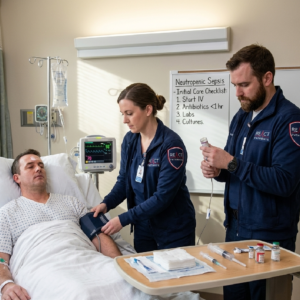
Course Overview In patients with suppressed immune systems, an infection isn't just an illness—it is a catastrophic, time-critical oncology emergency. Neutropenic sepsis can progress from subtle malaise to septic shock, multi-organ failure, and death in just a few hours if…

Course Overview When a major trauma patient arrives, the clinical environment becomes high-pressure and chaotic. Survival depends entirely on a
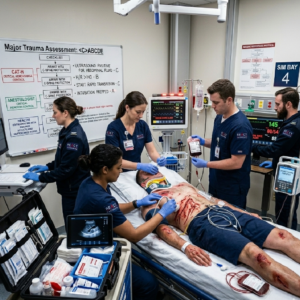
Course Overview When a major trauma patient arrives, the clinical environment becomes high-pressure and chaotic. Survival depends entirely on a fast, highly organised, and systematic response. This flagship module provides a masterclass in the initial assessment and emergency stabilisation of…

Course Overview In modern acute medicine, waiting hours for a formal radiology report can compromise patient care. Frontline clinicians need

Course Overview Hyperkalaemia is a silent, rapid killer capable of causing fatal cardiac arrhythmias with little to no warning. This
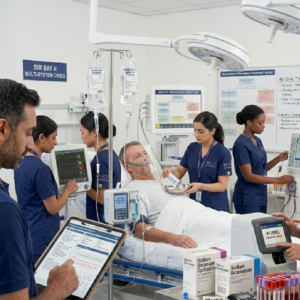
Course Overview Hyperkalaemia is a silent, rapid killer capable of causing fatal cardiac arrhythmias with little to no warning. This specialised module offers an authoritative introduction to the systematic recognition, rapid laboratory assessment, and emergency management of elevated potassium levels. Clinicians…

Course Overview Hyponatremia is one of the most common—yet poorly understood—electrolyte imbalances encountered in acute hospital settings. Managing it incorrectly
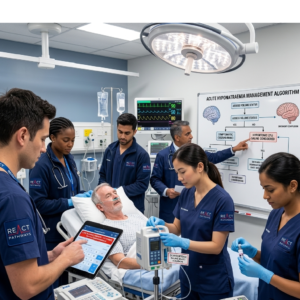
Course Overview Hyponatremia is one of the most common—yet poorly understood—electrolyte imbalances encountered in acute hospital settings. Managing it incorrectly can lead to irreversible neurological devastation. This essential module delivers a robust, systematic framework for accurately recognizing, classifying, and correcting…

Course Overview In acute and emergency care environments, a head injury can evolve from a seemingly minor incident into a

Course Overview In acute and emergency care environments, a head injury can evolve from a seemingly minor incident into a life-threatening crisis in a matter of minutes. This module delivers a comprehensive, high-impact introduction to the systematic recognition, precise assessment, and…