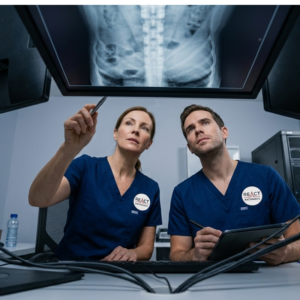
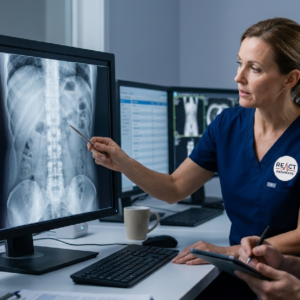
 Flexible E-Learning: Self-paced, remote digital learning featuring interactive clinical cases and step-by-step guided explanations.Face-to-Face Teaching: Dynamic, classroom-based workshops packed with facilitated peer discussions, practical case applications, and expert clinician-led teaching.
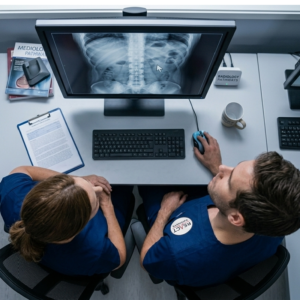 Systematic Frameworks: Learn a structured approach to ensure you never miss subtle or complex radiological signs.Emergency Spotlighting: Dedicated focus on high-stakes, life-threatening surgical emergencies.Clinical Correlation Triad: Master how to seamlessly integrate X-ray findings with patient history, physical examination, and lab results.Pitfall Prevention: Practical insights into common interpretation of errors and how to safely avoid them.
By the end of this module, you will be able to:
Apply a foolproof, systematic review framework to assess bowel gas patterns, calcifications, and foreign bodies.Confidently differentiate between the radiographic presentations of small and large bowel obstructions.Rapidly detect life-threatening pathologies including pneumoperitoneum, volvulus, and toxic megacolon.Identify abnormal soft tissue profiles, faecal loading, and unexpected organ shadows.Understand the hard limitations of AXRs and determine exactly when to escalate to advanced imaging selection.