A vital, foundational skill-builder for any clinician or therapist entering high-acuity or intensive care spaces:
 Qualified Nurses in Intensive Care Units, High-Dependency Units, Emergency Departments, and TheatresMedical Students and Junior Doctors beginning intensive care, anaesthetic, or acute medicine rotationsOperating Department Practitioners (ODPs) and Anaesthetic Assistants managing perioperative careRespiratory Physiotherapists and Respiratory Therapists involved in positioning, clearance, and weaningParamedics and Transfer Practitioners moving ventilated patients within emergency systemsClinical Educators and Team Leaders training staff on ventilator safety pathways and alarm monitoringFlexible E-Learning: Self-paced, remote digital learning featuring interactive clinical cases and step-by-step guided explanations.Face-to-Face Teaching: Dynamic, classroom-based workshops packed with facilitated peer discussions, practical case applications, and expert clinician-led teaching.
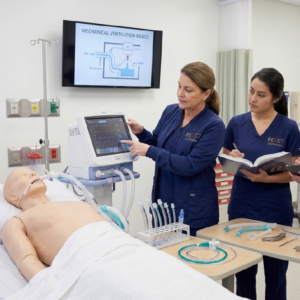 Ventilation Architecture Deconstructed: Easy-to-understand guides explaining tidal volumes, respiratory rates, PEEP, and pressure versus volume modes.The Alarm Interception Map: Structured troubleshooting pathways to handle high-pressure, disconnect, and low-volume ventilator alerts safely.Physiological Feedback Analytics: Techniques to monitor gas exchange using real-time oxygenation trends and serial arterial blood gases.The Safe Care Bundles: Immediate frameworks to minimise ventilator-associated pneumonia, optimise sedation, and prevent lung injury.
By the end of this module, you will be able to:
Explain the fundamental physiological goals and modes of mechanical ventilation clearly.Interpret critical ventilator settings, metrics, and pressure waveforms on the monitor screen.Troubleshoot urgent ventilator alarms systematically to ensure continuous, safe patient ventilation.Assess patient-ventilator synchrony, managing secretions, sedation tiers, and airway positions.Identify signs of acute clinical deterioration or barotrauma, escalating concerns to senior teams instantly.