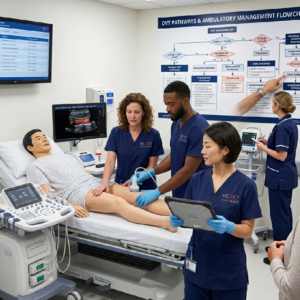
An essential masterclass for clinicians managing venous thromboembolism streams in same-day services:
 Advanced Clinical Practitioners (ACPs) and ACP traineesMedical Students and Junior DoctorsHaematology, Urgent Care, and Ambulatory Nurses / AHPsEmergency Medicine and Acute Care CliniciansSDEC, Anticoagulation, and Thrombosis Pathway CliniciansFlexible E-Learning: Self-paced remote learning with Wells' score calculators, interactive coagulation scenarios, and guided case breakdowns.Face-to-Face Teaching: Classroom workshops with real-world case applications, facilitated pathway troubleshooting, and clinician-led anticoagulation seminars.
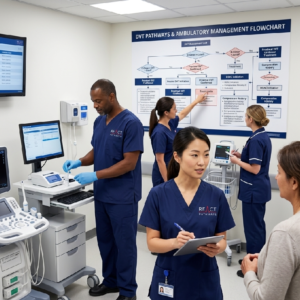 Diagnostic Probability Framework: Seamless integration of scoring systems and biomarker testing to guide clinical decisions.Differential Diagnosis Mastery: Clear protocols to separate vascular clots from musculoskeletal or dermatological lookalikes.Safe Anticoagulation Protocols: Practical guidance on medication selection, precise dosing calculations, and patient safety screening.Pulmonary Embolism Screening: Rapid assessment tools to instantly recognise early indicators of a PE and coordinate rapid escalation for high-risk patients.Master Thrombosis Pathophysiology: Deeply understand venous thromboembolism (VTE) risk factors, clot formation mechanisms, and lower limb presentation signs.Apply Probability Scoring: Master the flawless application of clinical probability scoring systems paired with strategic D-dimer testing.Differentiate Mimics: Confidently distinguish a deep vein thrombosis (DVT) from cellulitis, musculoskeletal trauma, and chronic venous disease.Initiate Anticoagulation Safely: Choose appropriate anticoagulant options, calculate correct dosages, screen for contraindications, and assess bleeding risks.