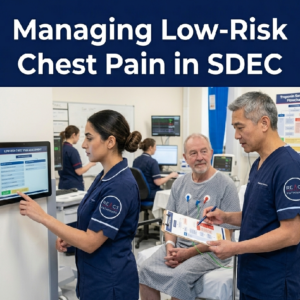

Crucial for any clinician working in acute medical intake, emergency departments, or SDEC units:
 Advanced Clinical Practitioners (ACPs) and ACP traineesMedical Students and Junior DoctorsCardiology, Acute, and Urgent Care Nurses / AHPsEmergency Medicine and Acute Care CliniciansEmergency Medicine and Acute Care CliniciansFlexible E-Learning: Self-paced remote modules featuring high-yield ECG libraries, troponin kinetic calculators, and interactive case simulations.Face-to-Face Teaching: Intensive classroom workshops focused on complex ECG interpretation, risk scoring application, and clinician-led pathway mapping.
 Lethal Mimic Differentiation: Clear clinical guidance to separate benign chest wall pain from high-stakes emergencies like acute coronary syndrome (ACS), aortic dissection, or pulmonary embolism.SDEC Selection Framework: Practical application of risk-stratification metrics to streamline ambulatory care pathways.Ambulatory Observation Protocols: Structured methods to coordinate observation periods, safely time repeat cardiac biomarkers, and deliver targeted analgesia.Discharge Safety-Netting: Definitive criteria for safe discharge versus immediate inpatient escalation.Map Chest Pain Pathologies: Differentiate between benign musculoskeletal issues and lethal cardiac, respiratory, or gastrointestinal (GI) conditions.Master Advanced Diagnostics: Perfect your systematic history-taking, cardiovascular/respiratory physical examinations, ECG interpretation, and troponin testing.Apply Risk Stratification Tools: Confidently deploy evidence-based risk assessment scores to identify appropriate Same Day Emergency Care (SDEC) candidates.Formulate Escalation & Discharge Plans: Create robust safety-nets, map clear follow-up plans, and identify precisely when a patient must pivot to an inpatient bed.