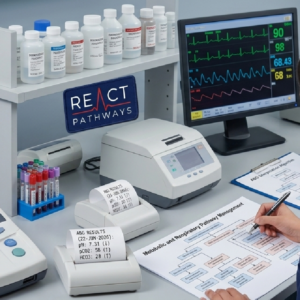
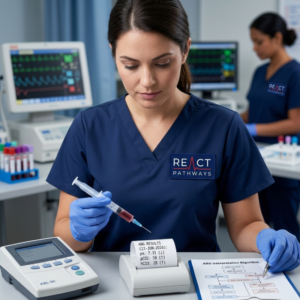
This dual-level module is strategically designed for introductory, intermediate, and advanced healthcare learners and professionals who need to establish or sharpen their clinical reasoning.
 Medical Students & Junior Doctors: Prepare for clinical placements, OSCEs, acute care assessments, and rotations across emergency, acute medicine, respiratory, anaesthetics, or critical care environments.Nurses & Nursing Students: Enhance your acute patient monitoring capabilities and bolster your confidence when escalating care for deteriorating patients.Physician Associates & Allied Health Professionals: Support the rapid assessment of acutely unwell patients within respiratory, emergency, or critical care teams.Advanced Practitioners & Care Escalation Teams: Clinicians responsible for guiding urgent decisions regarding oxygen therapy, ventilation support, or critical care admission.Simulation & Practical Candidates: Learners preparing for simulation-based training or supervised clinical case discussions.
To accommodate busy clinical schedules, this training is delivered in two highly flexible formats:
Flexible E-Learning: Self-paced remote learning featuring interactive digital cases, guided expert explanations, and step-by-step diagnostic pathways.Face-to-Face Teaching: Dynamic, classroom-based workshops featuring facilitated group discussions, real-world clinical case applications, and clinician-led teaching.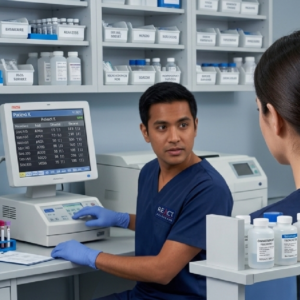 Dual Blueprint Integration: Combines fundamental ABG parameter science with complex, multi-system advanced diagnostics.Video-Based Clinical Interpretation: Watch experienced clinicians work through real results, demonstrating how to link values directly to patient presentations while avoiding common diagnostic traps.Comprehensive Pathophysiology Mapping: Covers a wide spectrum of clinical presentations including COPD, DKA, sepsis, anxiety-related hyperventilation, and acute vomiting.Structured Decision Frameworks: Delivers a reliable, step-by-step methodology built to withstand high-pressure, fast-paced acute care environments.
By the conclusion of this course, participants will be able to:
Analyse Core Parameters: Instantly interpret pH, PaCO2 , bicarbonate (HCO3− ), PaO2 , oxygen saturation (SaO2 ), lactate, and base excess.Differentiate Acid-Base Pathologies: Confidently diagnose respiratory acidosis, metabolic acidosis, respiratory alkalosis, and metabolic alkalosis.Evaluate Physiological Compensation: Quantify expected renal and respiratory compensatory responses to determine the chronicity and severity of an illness.Deconstruct Mixed Disorders: Utilise advanced concepts like the Anion Gap to uncover co-existing, hidden metabolic and respiratory issues.Formulate Targeted Action Plans: Translate ABG data into immediate, safe clinical decisions regarding ventilation settings, oxygen therapies, and metabolic corrections.