
An invaluable specialisation for clinicians across emergency, acute, oncology, or community care environments:
 Qualified Nurses in emergency departments, AMUs, oncology/haematology wards, and chemotherapy day units.Medical Students & Junior Doctors who must assess cancer patients presenting with complex symptoms like neutropenic fever, weakness, or neurological deficits.Paramedics & Emergency Care Practitioners managing oncology patients in residences, hospices, or emergency scenes.Oncology, Haematology & Palliative Teams seeking to optimise their urgent symptom control and escalation planning.Healthcare Assistants, Students & Clinical Educators requiring sharper awareness of oncology red flags and safe governance pathways.
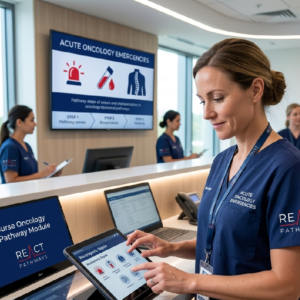 Emergency Presentation Catalog: Comprehensive coverage of neutropenic sepsis, metastatic spinal cord compression (MSCC), tumor lysis syndrome, hypercalcaemia of malignancy, and superior vena cava obstruction (SVCO).Treatment-Context Mapping: Learn to assess risks specifically tied to recent chemotherapy, immunotherapy, radiotherapy, or targeted therapies.Rapid-Action Protocols: Clear, structured pathways for timely antibiotic administration, steroid therapy, and symptom control.
By the end of this module, you will be able to:
Perform structured assessments using the ABCDE approach adapted specifically for cancer patients.Identify oncology-specific red flags even when clinical presentations appear deceptively mild.Coordinate immediate, life-saving escalations and communicate seamlessly with oncology, haematology, and palliative care specialists.