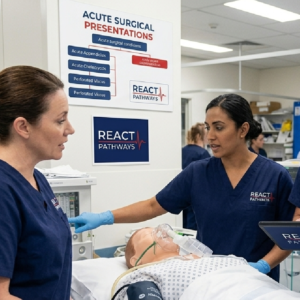
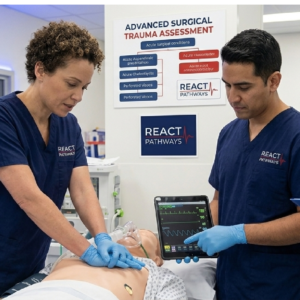
Essential for frontline healthcare professionals involved in initial acute patient triaging and surgical paths:
 Medical Students, Junior Doctors & Foundation Trainees learning acute, general, or vascular surgical medicine.Nurses & Advanced Clinical Practitioners (ACPs) managing frontline assessments in urgent care centres or emergency departments.Emergency Medicine & Surgical Clinicians looking to sharpen their diagnostic accuracy and speed.Flexible E-learning: Self-paced digital curriculum with interactive abdominal examination simulators, imaging case matchers (Ultrasound/CT), and guided clinical pathways.Face-to-Face Teaching: Classroom workshops focusing on surgical case triage, fluid resuscitation simulation, and clinician-led pre-operative coordination reviews.
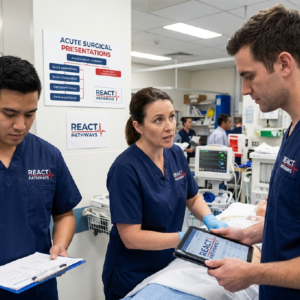 The Surgical Red Flag Matrix: Clear instructions on identifying peritonism, severe localised pain, gastrointestinal bleeding, and sepsis.Advanced Imaging & Diagnostics: Training on the strategic selection and interpretation of blood tests, emergency ultrasounds, and CT scanning.Pre-Operative Stabilisation Framework: Practical protocols for fluid resuscitation, targeted analgesia, empiric antibiotic therapy, and pre-operative preparation.
By the end of this module, you will be able to:
Perform focused history-taking and comprehensive abdominal/systemic examinations to identify surgical red flags.Differentiate surgical emergencies from non-surgical conditions using structured clinical reasoning.Initiate immediate stabilising treatments (such as fluid resuscitation and sepsis management) and activate surgical escalation pathways seamlessly.