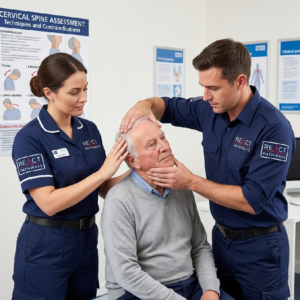
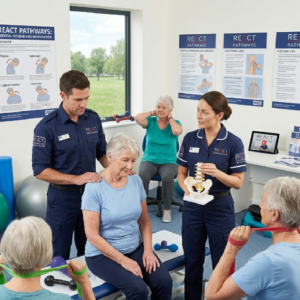
Highly recommended for healthcare professionals operating within trauma, emergency, or acute care pathways:
 Medical students, junior doctors, and foundation traineesEmergency medicine, trauma, and acute care cliniciansNurses and advanced clinical practitioners in major trauma settingsPre-hospital professionals, paramedics, and ambulance service crewsFrontline clinicians looking to sharpen their spinal clearance confidenceFlexible E-learning: Self-paced remote learning with interactive cases and guided explanations.Face-to-Face Teaching: Classroom-based workshops with facilitated discussion, case application, and clinician-led teaching.
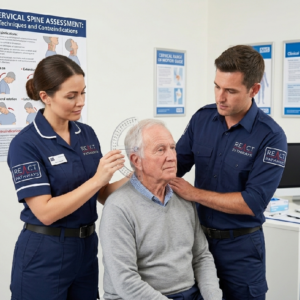 Clinical Decision Rule Integration: Master the formal frameworks used to safely exclude cervical spine injury without over-imaging.Advanced Imaging Protocols: Learn the indications for CT and MRI scans, vital findings to flag, and critical airway considerations for immobilised patients.Secondary Injury Prevention: Standardise team handling techniques and multidisciplinary communication channels to safeguard spinal cord integrity.
By the end of this course, you will be able to:
Analyse trauma mechanics to calculate specific risks of cervical spine instability.Conduct a focused, reliable neurological examination for suspected cord compression.Navigate local and major trauma escalation pathways for unstable spinal injuries.