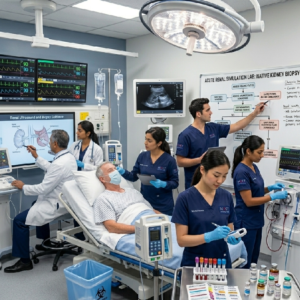
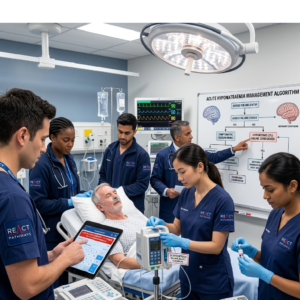
This course is custom-built for healthcare professionals operating in environments where acutely unwell or fluid-compromised patients present:
 Medical & Nursing Students building foundational knowledge in internal and acute medicine.Junior Doctors & Foundation Trainees tasked with daily fluid prescribing and lab review.Advanced Clinical Practitioners & Inpatient Ward Nurses monitoring fluctuating electrolyte trends.Emergency Medicine & Critical Care Clinicians managing severe, symptomatic metabolic emergencies.Flexible E-learning: Self-paced remote learning featuring highly interactive clinical cases, algorithmic decision trees, and expert-guided explanations.Face-to-Face Teaching: High-energy, classroom-based workshops utilising facilitated peer discussions, real-world case applications, and clinician-led teaching.
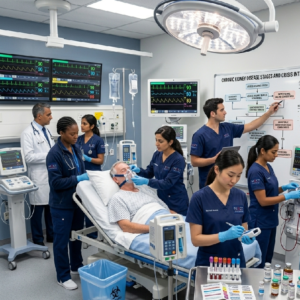 Detailed guidance on interpreting serum and urine osmolality alongside urinary sodium.Advanced clinical pearls for conducting flawless physical fluid status evaluations.Step-by-step sodium correction calculators and evidence-based rate monitoring guidelines.Frameworks for medication reviews to eliminate drug-induced hyponatremia (e.g., SIADH triggers).