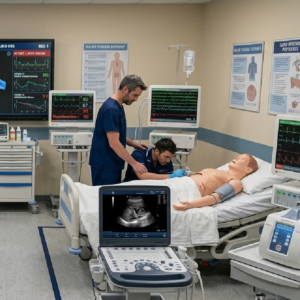
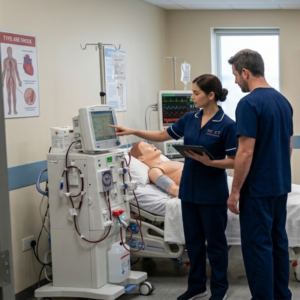
This course benefits anyone working across acute, urgent, or long-term care environments where early recognition of deterioration is critical to patient safety, including:
 Hospital Ward & A&E Teams: Doctors, nurses, and nursing associates managing acute patient workloads.Pre-Hospital & First Responders: Paramedics and emergency responders stabilising patients in the field.Community & Primary Care Teams: GP practice staff and community healthcare teams managing initial undifferentiated presentations.Social & Residential Care Staff: Care home staff and healthcare assistants tracking early warning signs of physical decline.Healthcare Students: Medical and nursing students building foundational acute care skills.Flexible E-Learning: Self-paced remote learning with interactive cases and guided explanations.Face-to-Face Teaching: Classroom-based workshops with facilitated discussion, case application, and clinician-led teaching.
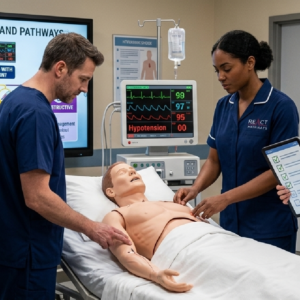 The Four-Type Shock Matrix: In-depth breakdown of the unique pathophysiology, risks, and presentations of Hypovolemic, Cardiogenic, Distributive, and Obstructive shock.Staged Progression Tracking: Learn to identify the subtle transition windows from compensated to uncompensated shock through systematic vital sign tracking.Immediate Stabilisation Frameworks: Step-by-step guidance on airway support, breathing optimisation, targeted fluid resuscitation, and treating the primary cause.
By the end of this module, you will be able to:
Differentiate between the four primary classifications of shock using structured clinical indicators.Assess and Monitor vital sign trends to spot physiological decompensation before severe complications develop.Execute immediate, type-specific management strategies and escalate care seamlessly within a multidisciplinary team.