Invaluable for healthcare professionals, operational managers, and blue-light responders who may be called to respond to large-scale emergencies:
 Emergency Medicine, Anaesthetic, Intensive Care, Trauma, and Surgical CliniciansQualified Nurses in Emergency Departments, Resuscitation areas, and Acute assessment settingsParamedics, Ambulance Staff, Retrieval Teams, and Pre-Hospital PractitionersOperational Managers, Team Leaders, Incident Commanders, and Clinical CoordinatorsMedical Students and Junior Doctors building foundational crisis resource management skillsClinical Educators and Wellbeing Leads managing major incident preparedness and staff debriefsFlexible E-Learning: Self-paced, remote digital learning featuring interactive clinical cases and step-by-step guided explanations.Face-to-Face Teaching: Dynamic, classroom-based workshops packed with facilitated peer discussions, practical case applications, and expert clinician-led teaching.
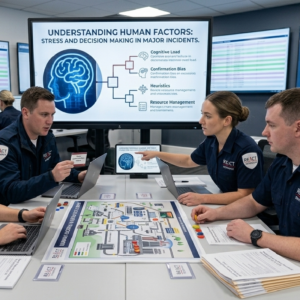 Cognitive Overload Protection: Proven techniques to mitigate stress responses, fatigue, and fixation errors.Command & Control Choreography: Frameworks for clear role allocation, structured briefings, and closed-loop communication under pressure.Situational Awareness Architecture: Systems to maintain a unified understanding of patient priority and resource limitations.The Resilience Engine: Structured post-incident debriefing templates designed to safeguard staff wellbeing and drive organisational learning.
By the end of this module, you will be able to:
Recognise the immediate impact of cognitive load, stress, and fatigue on clinical decision-making during crises.Implement structured command and control systems to optimise role allocationApply closed-loop communication and major incident protocols to eliminate information fragmentation. and team performance.Apply closed-loop communication and major incident protocols to eliminate information fragmentation.Maintain a high level of situational awareness regarding resource management and patient prioritisation.Facilitate psychologically safe, effective briefings and debriefings to support team resilience and long-term learning.