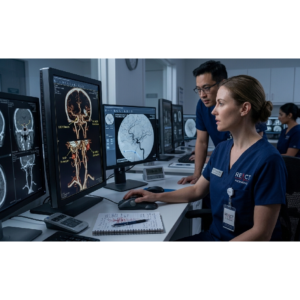
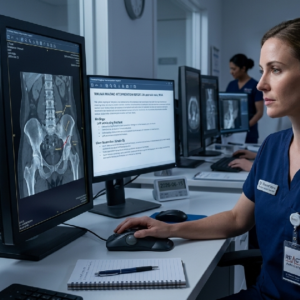
 Emergency Medicine Physicians & Consultants looking to sharpen their bedside diagnostic reasoning and lead ED shifts with total confidence.Trauma Team Leaders & Resuscitation Clinicians who must rapidly coordinate multidisciplinary pathways based on dynamic imaging.Advanced Clinical Practitioners (ACPs) & Trauma Nurses eager to excel in systematic trauma assessment and escalation frameworks.Radiographers & Surgical Trainees seeking closer clinical integration with the primary and secondary trauma surveys.Flexible E-Learning: Self-paced, remote digital learning featuring interactive clinical cases and step-by-step guided explanations.Face-to-Face Teaching: Dynamic, classroom-based workshops packed with facilitated peer discussions, practical case applications, and expert clinician-led teaching.
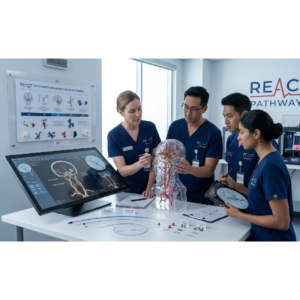 Comprehensive Multi-Modality Curriculum: Mastery modules spanning plain radiography, Focused Assessment with Sonography in Trauma (eFAST), and contrast-enhanced multidetector CT trauma imaging.RCEM Curriculum Mapping: Explicitly aligned with RCEM Clinical SLO 3 (Resuscitation), SLO 4 (Trauma Care), SLO 6 (Procedural Skills), SLO 7 (Complex and Challenging Situations), and SLO 8 (Leading the ED Shift).Systematic ABCDE Review Framework: A reproducible approach optimised for chest trauma imaging to evaluate airways, breathing structures, circulation, and the diaphragm consistently under pressure.Advanced Injury Matrix: Dedicated deep-dives into solid organ injuries (liver, spleen, kidney, pancreas), complex hollow viscus and mesenteric injuries, and retroperitoneal hemorrhage.Neurotrauma & Spinal Alignment Tracking: Bulletproof frameworks for interpreting CT head scans, facial trauma, and critical cervical spine fracture patterns while avoiding common diagnostic pitfalls.Case-Based Simulation: Real-world polytrauma reviews focused on prioritising multiple coexisting injuries, diagnosing occult fractures, and executing flawless escalation pathways.