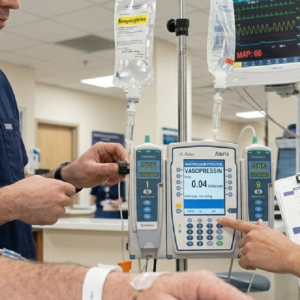
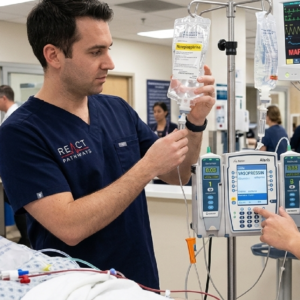
Custom-built for clinicians responsible for the stabilisation of critically ill patients in acute care environments:
 Qualified Nurses in Emergency Departments, Resuscitation areas, High-Dependency, and Intensive Care UnitsMedical Students, Junior Doctors, and Emergency Medicine Clinicians managing refractory shock statesAdvanced Clinical Practitioners (ACPs) and Trainees initiating advanced circulatory supportPharmacists and Pharmacy Students overseeing medicine safety and emergency drug preparationParamedics, Retrieval Teams, and Transfer Practitioners managing unstable patients during transportClinical Educators and Governance Leads developing local high-risk medication guidelinesFlexible E-Learning: Self-paced, remote digital learning featuring interactive clinical cases and step-by-step guided explanations.Face-to-Face Teaching: Dynamic, classroom-based workshops packed with facilitated peer discussions, practical case applications, and expert clinician-led teaching.
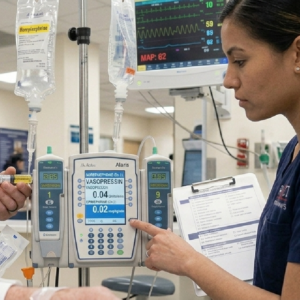 Vasoactive Profiles: Deep dive into the precise mechanisms, indications, and differences of noradrenaline, adrenaline, dopamine, and vasopressin.Vascular Access Safeguards: Strict guidelines to minimise the risk of peripheral extravasation and severe tissue injury.Precision Titration Blueprints: Practical, data-driven frameworks to safely titrate infusions based on lactate, mean arterial pressure, and peripheral perfusion.Complication Interception Systems: How to instantly detect, manage, and escalate vasopressor-induced arrhythmias or ischemia.
By the end of this module, you will be able to:
Formulate clear clinical rationales for initiating vasopressor therapy across different shock states.Differentiate safely between commonly used vasoactive agents based on patient presentation and local guidelines.Implement strict safety controls regarding vascular access selection, infusion pumps, and dose titration.Monitor vital perfusion parameters comprehensively, including lactate levels, urine output, and cardiac rhythms.Detect and manage acute complications or adverse reactions to vasopressor infusions immediately.